

press filter
view: 348
What is a Filter Press?
Many people, when first encountering a filter press, may ask: What is a filter press and what does it do?
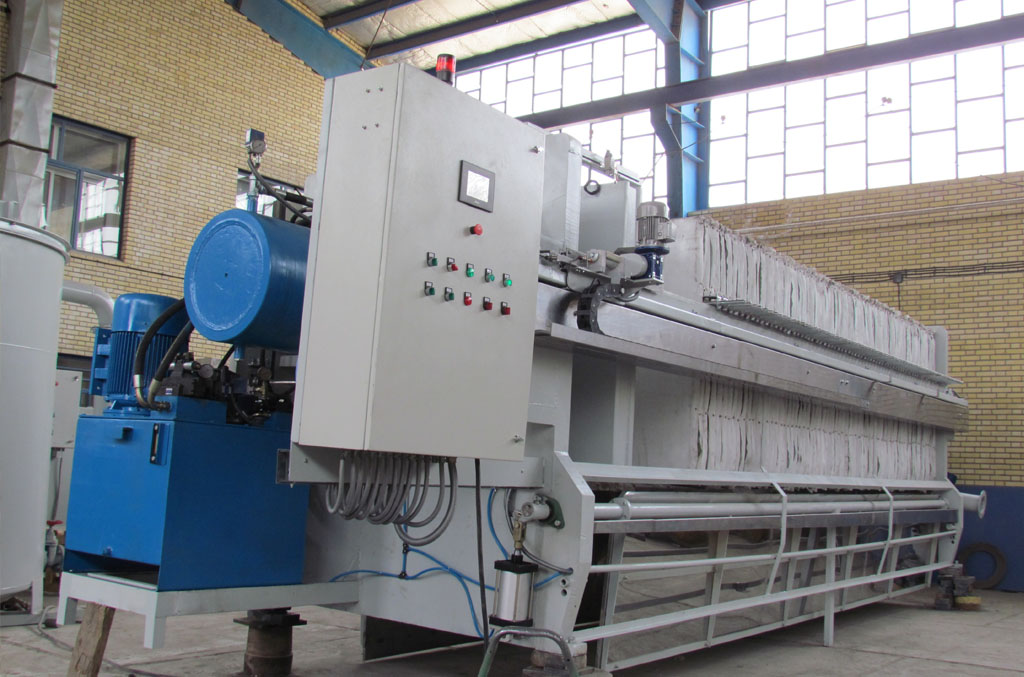
In simple terms, a filter press is a device used to separate solid particles from liquids, especially in large volumes. It is widely used in wastewater treatment processes to remove suspended solids from liquids.
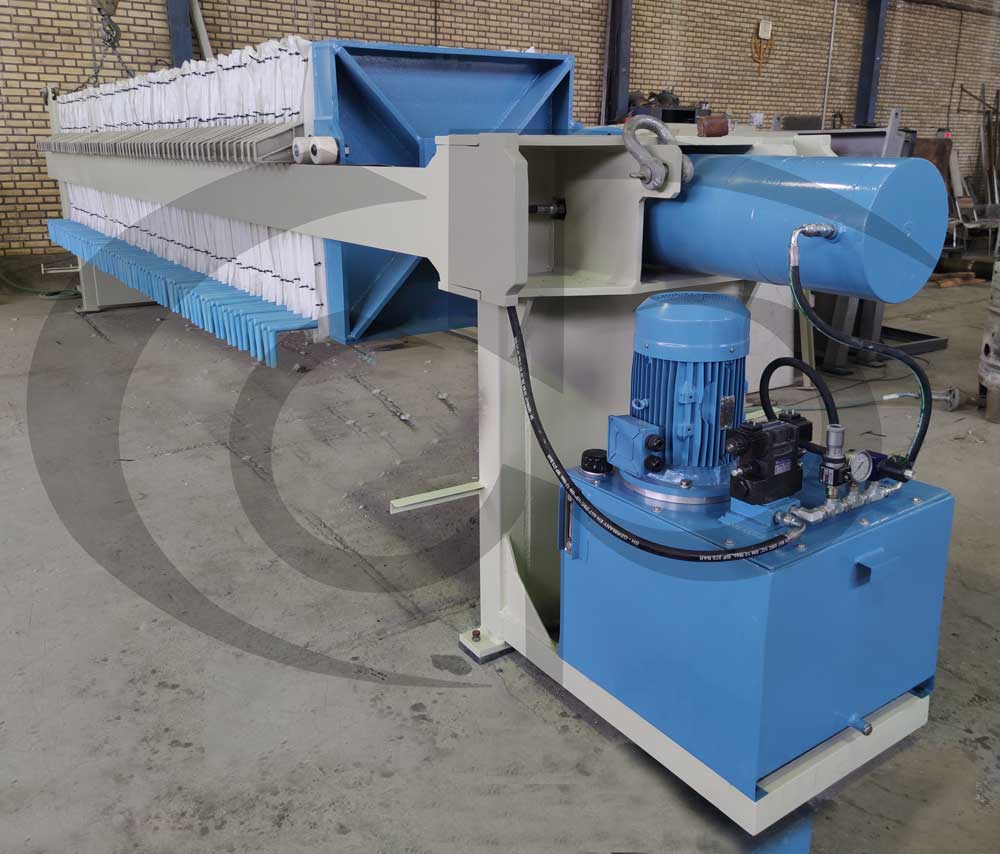
The separation process in a filter press is carried out by applying pressure through a hydraulic jack to a series of plates. This pressure forces the liquid to pass through filter media while the solid particles remain trapped between the plates. The size and capacity of the hydraulic system depend on the number and dimensions of the plates.
Applications of Filter Press
Due to its efficient solid-liquid separation capability, a filter press is used in various industries, including:
The device is particularly useful in applications where moisture reduction is required. Thanks to its pressure-based mechanism, a filter press can remove a significant amount of water from sludge.
Output of a Filter Press
After the filtration process:
The usability of the filter cake depends on the type of wastewater. For example, recent studies have shown that filter cake generated from stone processing wastewater can be reused after further treatment.
Advantages of Using a Filter Press
Using a filter press offers several important benefits, including:
Compared to traditional sedimentation methods—where production may need to stop for 1–2 months to clean settling ponds—filter press systems enable continuous and simultaneous treatment during production, significantly improving productivity.
Additionally, filter presses play a key role in water conservation and recycling, while producing a smaller volume of solid waste (filter cake), which reduces transportation and disposal costs.
Applications of Filter Press (Detailed)
Filter presses are used in a wide range of industries, such as:
Features of food-grade filter presses:
How Does a Filter Press Work?
To explain how a filter press works, the following steps can be described:
Also, water particles pass through the pores of the filter press cloth membrane. This is where the importance of the filter cloth material becomes evident, because the higher the quality of the filter cloth, the greater its resistance to tension and pressure, and the higher the dewatering efficiency of the cake. It should be noted that, in addition to quality, the cloth material must be suitable for the type of wastewater being processed.
A complete video demonstrating how a filter press works is available at the link opposite.
How a Filter Press is Designed and Manufactured:
It can be said that in the design and construction of a filter press device and wastewater treatment system, steel sheets are widely used. Steel sheets of various sizes, thicknesses, and materials are assembled together to form a steel structure for pressing.
The structure of the filter press is designed in such a way that the Teflon plates can be easily and effectively compressed by the hydraulic jack. After the required pressure is applied by the jack, the valves between the plates create a path for the discharge of water through the channels within the device. It should be noted that these channels are also made of steel sheets.
To design and manufacture a filter press, we must understand the design principles and, with knowledge of the technical specifications and required capacity, proceed with the design and construction of the device. This process requires many years of experience and complete technical knowledge. For full information on how to calculate filter press capacity, click here.
Now, to organize the construction stages of a filter press, they are listed below:
First, the steel and cast components must be designed, prepared, and made ready
Then, the steel components are cut, including the arms of the filter press, and subsequently machined
The frames and plates of the filter press are surface-machined
Then drilling and installation of handles on the plates and frames are carried out
The cast components are ground and also inspected for quality, meaning they undergo quality control
Assembly of the initial and final parts of the filter press and its arms
Construction of the hydraulic unit of the filter press
Installation of the hydraulic unit on the chassis of the filter press
Assembly of the plates on the chassis
Testing of various parts and activation of the hydraulic system
Disassembly of the hydraulic unit and plates
Reassembly of the plates on the filter press chassis
Final testing of the filter press
Determining Filter Press Dimensions:
The important factors that play a role in determining the dimensions of a filter press, ultimately leading to its design and construction, include:
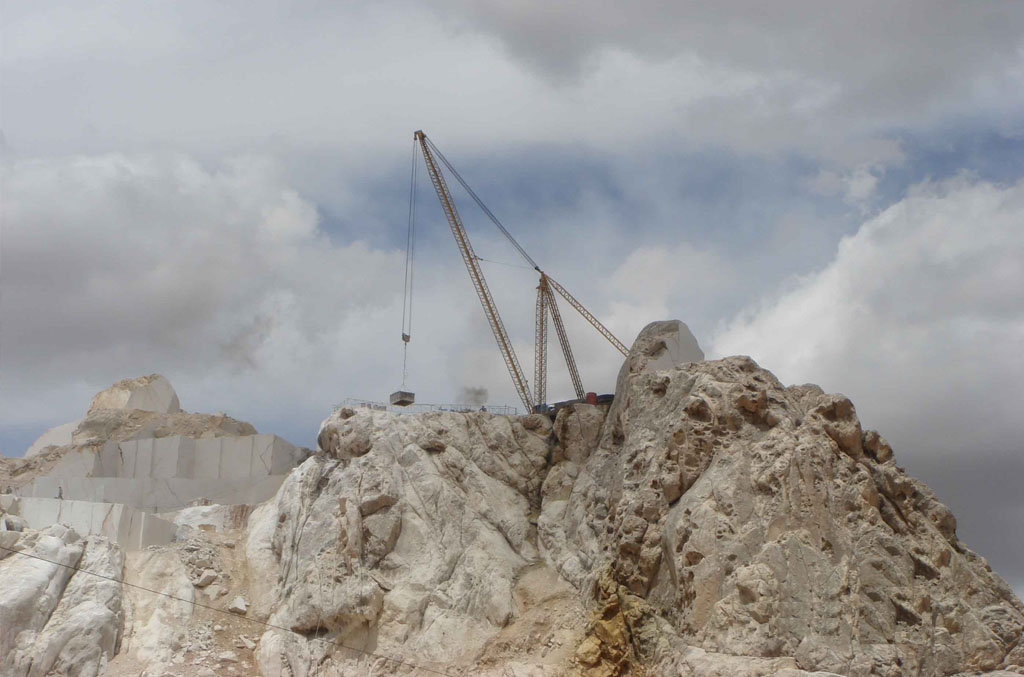
It should be noted that the larger the dimensions of the filter press, the larger cranes are required for its transportation and handling. In the related article on types of cranes, you can review different cranes used for moving filter press equipment.
Types of Filter Press:
Filter presses are categorized based on various criteria, each containing several subcategories. Below, we introduce the different types of filter press. It should be noted that the categories mentioned below can exist simultaneously in a single filter press; for example, an automatic chamber filter press that is both automatic and uses chamber-type plates.
You may wonder where the hydraulic filter press fits into this classification. It should be noted that the hydraulic system, commonly referred to as a hydraulic filter press, exists in all the types mentioned above, and its operation has already been explained earlier.
Manual Filter Press (Small Filter Press):
Another type of filter press is the manual or small filter press. This type has its own specific features, discussed in detail below. It can be said that manual filter presses are more affordable compared to fully automatic models and are mainly used in small-scale industries with low wastewater volumes, such as laboratories.
Features and Applications of Manual Filter Press:
Automatic Filter Press:
Common features of automatic filter presses include:
Common operations in automatic filter presses:
Advantages of Automatic Filter Press:
Hydraulic System of Filter Press (Hydraulic Filter Press):
In a hydraulic filter press, pressure for various components is supplied through hydraulic power. These components include:
Each filter press includes a hydraulic unit that distributes pressure across these components. Hydraulic pressure is typically generated using fluids such as oil.
Main Jack:
The main jack operates using oil and provides the force required to compress the filter plates. Oil is pumped into the jack, and the resulting pressure compresses the plates, enabling separation of liquid and solid materials.
The hydraulic jack has two movements:
Pressure and flow rate can be monitored in both directions using control systems within the hydraulic unit.
To ensure proper operation, the required pressure must be maintained consistently throughout the filtration cycle.
The design of the jack, hydraulic unit, and plates are interdependent. Larger plates and stronger feed pumps require higher pressure.
To achieve higher pressure:
Plate-Shifting Robot:
This optional system automatically opens the plates. It can operate in two ways:
The choice depends on design considerations and customer requirements.
Plate Washing System:
This system is synchronized with the plate-shifting robot. As each plate opens, washing nozzles are activated according to a predefined PLC sequence to clean the plates. This system can also utilize hydraulic pressure.
Chamber Filter Press:
A type of filter press with specific plate design differences compared to membrane filter presses, including:
Membrane Filter Press:
The working principle is explained in detail in the related chamber filter press section.
Open-Circuit Filter Press:
Each plate has its own outlet.
Closed-Circuit Filter Press:
The discharged water is not visible and is collected and discharged as a single stream.
Filter Press Price:
There are many factors involved in determining the price of a filter press. Here, we present 11 practical factors affecting pricing.
The price of a filter press depends on the following factors:
1. Dimensions and Capacity:
Naturally, the larger the size and capacity of the filter press, the higher its price. To determine capacity, the volume of input materials (including solids and liquids, commonly referred to as slurry or sludge) must be evaluated. The greater the volume, the larger the machine size.
Cake formation time (depending on wastewater type) and operating shift duration also influence capacity.
2. Type of Jack:
Another pricing factor is the type of jack used:
As the size of the filter press increases, the jack must also be larger to provide sufficient pressure, which increases the overall cost.
To calculate jack power, both force and speed parameters must be considered.
Manual Jack:
A mechanical screw-type jack, mainly used in small filter presses. It operates by manual rotation, where gears move the screw and generate motion.
Hydraulic Jack:
Operates using hydraulic pressure and is commonly used in industrial filter presses.
3. Plate Opening and Closing System:
Filter presses can be:
This difference significantly affects pricing.
4. Number, Size, and Material of Plates:
Key factors include:
Plate sizes typically range from 40×40 cm to 2×2 meters. Larger plates result in larger machines and higher prices.
Plate materials include:
The choice depends on the type of processed material (e.g., metal plates are required in high-temperature oil processing).
5. Filter Cloth Material:
The cloth type depends on the wastewater and filtered material. Common types include:
The choice directly affects performance and cost.
6. Electrical Panel Components:
Includes:
Different brands lead to different costs.
7. Hydraulic System Components:
Filter presses can be:
Each type has a different price depending on its configuration.
Used machines often have leakage and technical issues; therefore, purchasing new equipment is recommended for long-term cost savings.
8. Drip Tray System:
Most systems include a drip tray, but it may be optional. Its presence improves water efficiency but increases cost.
9. Manual or Automatic Operation:
The operation mode affects:
Automation increases complexity and cost but improves performance.
10. Open or Closed Circuit:
This depends on:
It directly impacts the final price.
11. Membrane vs. Chamber Type:
Membrane filter presses generally produce drier cake and are more expensive than chamber types due to their advanced performance.
12. After-Sales Service and Warranty:
Frequently Asked Questions:
Most customer questions arise during operation and vary depending on usage. The best way to get accurate answers is by consulting experts and receiving professional advice.

Dena Fanon's Sales Department is available every day of the week to answer your pre-purchase inquiries.

All products and machines are provided with a warranty from Dena Fanon Company along with support services.

We always have the best ideas and the latest production technologies to improve your business.

We are with you every day of the week at the main office of Dena Fanon. Always by your side.


Iran/Esfahan/8th km of Tehran road/32nd street /Denafonoon co.
Tell : 03133803936
Fax : 03133803937

You can contact the company's phone numbers during working hours for device purchase request and pre-purchase consultations.

If you have any questions or problems before buying on the site and support problems, you can contact the company's support and sales phone number: 031 33803936.