
.jpg)
A multi-wire saw is a machine designed for cutting stone blocks
view: 187
Stone Cutting Machine
What Is a Multi-Wire Saw?
A multi-wire saw is a machine designed for cutting stone blocks, available in various sizes and configurations. The method used in multi-wire systems for cutting blocks into slabs relies on diamond wires. In fact, the multi-wire saw is considered the newest technology in the stone-cutting industry.
In this machine, the stone block is placed beneath the system, and as the wires begin to move, the block is sliced into slabs. In the following section, we will examine this large machine, its working mechanism, and the structure of diamond wires.
What Are the Advantages of a Multi-Wire Saw Compared to a Gang Saw?
Before the development of multi-wire saws, gang saws were the primary machines used for slab cutting. Many factories still use gang saws today; however, with the advancement of technology, multi-wire machines are gradually replacing them.
Here we will look at the advantages of multi-wire saws over gang saws:
Adjustable Thickness
One of the advantages of multi-wire saws is the ability to change the thickness of slabs by adjusting the spacing between the wires. It is worth noting that this machine is CNC‑controlled, and all modifications are made through computer settings.
Manufacturers adjust the wire spacing according to customer requirements, making slab cutting in various thicknesses easy and cost‑effective.
Reduced Material Waste
Multi-wire saws generate considerably less waste during cutting for several reasons:
Cutting is performed using diamond wires with a typical diameter of 6 to 8 millimeters. Thinner wires also exist but are used mainly for specific applications. The thin diameter results in less stone being turned into powder during cutting.
Equipped with advanced technology and precise control, multi-wire machines produce highly accurate and consistent cuts, reducing waste caused by cutting errors.
These machines perform multiple parallel cuts at the same time because several wires operate simultaneously. This minimizes the amount of stone lost between consecutive cuts.
High cutting speed shortens the contact duration between the wires and the stone, leading to lower friction and reduced stone loss.
Advanced cooling and lubrication prevent excessive heating of both the wire and the stone, ensuring cutting with minimal friction and waste.
Multi-wire machines are engineered to distribute cutting forces evenly, reducing unbalanced pressure on the stone and minimizing waste.
Overall, these factors make multi-wire systems far more efficient than traditional stone-cutting methods such as gang saws.
High Cutting Speed
The high cutting speed of multi-wire saws is achieved through several key factors:
Multi-wire machines use several diamond wires arranged in parallel. This allows multiple simultaneous cuts, increasing the contact area and greatly improving cutting speed.
The hardness and durability of the diamond abrasives on the wires allow them to cut hard materials—such as granite—with high speed and precision.
The cutting force is distributed among multiple wires, which reduces heat generation during cutting. This reduction in heat helps:
Other factors such as precise control systems and reduced waste also contribute to the high cutting performance of multi-wire machines, as explained earlier.
High-Volume Production
Multi-wire saws typically enable high-volume production, and this advantage results from several key factors, which are explained below:
As mentioned earlier, the high number of wires not only increases cutting speed but also boosts total production volume. Since many wires cut simultaneously, overall output rises significantly.
The diamond-coated wires used in multi-wire machines have high cutting efficiency, which ultimately contributes to higher production output.
The time required for adjustments and tool replacement in multi-wire cutting machines is significantly lower than in traditional methods. This reduced downtime is another reason for increased production capacity.
One of the benefits of multi-wire technology is reduced material waste and improved material efficiency due to its high cutting accuracy. This directly translates into greater production output.
Multi-wire machines are equipped with automated systems and precise control units that allow for accurate adjustment of cutting parameters, optimizing performance and increasing production volume.
Since the cutting force is distributed across multiple wires, the lifespan of each wire increases, reducing individual fatigue and wear.
Overall, these combined factors allow multi-wire saws to produce a high volume of accurately cut materials with excellent consistency and quality.
Cutting Slabs of Different Materials
The type of wire used for cutting different types of slabs varies. In some cases, a wire designed for cutting granite slabs can also be used for marble slabs; however, the reverse is not possible because granite has a much higher hardness compared to marble.
In some situations, even a granite wire cannot be used for certain marble or other stones, and this depends on various factors.
The wires used in multi-wire machines come in different diameters. However, the machine itself is designed based on a specific wire size. Although it is technically possible to use different wires on the machine, doing so leads to several issues, which are outlined below:
Using wires of different sizes causes higher mechanical wear in multi-wire machines. Unlike multi-wire systems, mono-wire machines do not suffer from this problem because they operate with a single wire.
When you replace the original wires with larger or smaller ones, the slab thickness produced by the machine becomes inconsistent because the wire diameter changes.
If a machine is designed for a specific wire size—for example, 6 mm—and you change that size, the entire cutting output becomes irregular. The machine’s designed standards are disrupted, and machine wear increases as a result.
Of course, when we say slab output becomes irregular, this may not be an issue for some manufacturers who intend to use each slab according to its own thickness in different applications.
Advantages of Using Thinner Wires for Multi-Wire Machines:
Disadvantages of Using Thinner Wires for Multi-Wire Machines:
Structure of Thin Diamond Wire:
The structure of thin diamond wire differs from thicker wires:
The segments on the diamond wire are responsible for cutting the slabs. A higher number of segments directly increases the working speed. The polymer used between the segments is manufactured using injection technology, meaning plastic is injected between each segment. Older diamond wires, however, were constructed by weaving components together.
It is important to note that multi-wire machines exclusively use thin wires, commonly 6mm or 7mm in diameter. Thicker wires are linear, and their ends are joined to form a loop, often by screwing bushes together. Multi-wire machines, however, use pre-formed, braided loops, not ones assembled by screwing ends together.
Important Consideration: If a diamond wire breaks in a multi-wire machine, it cannot be re-joined or repaired. The damaged wire must be sent back to the manufacturer. Such wires can potentially be repurposed for use in mono-wire machines by joining their ends to form a loop. This inability to repair wires directly is a disadvantage of multi-wire diamond wires.
Given that these wires are supplied by the manufacturer, it is crucial to specify the desired length (which must be compatible with the machine) when purchasing.
Multi-Wire Machine Size:
The size of a multi-wire machine is determined by the number of wires it accommodates, and its frame structure has a fixed dimension. The spacing between the rollers, which dictates the loop size or wire length, is also fixed and cannot be altered.
A higher number of wires in the machine leads to a greater cutting depth. The number of wires is influenced by both the wire diameter and the desired slab thickness. For instance, thinner slabs (e.g., 2 cm) require more wires, while thicker slabs (e.g., 3 cm) can be cut with fewer wires.
The maximum number of wires is typically around 70. This limit is set to efficiently cut the largest possible stone block width-wise without any material waste.
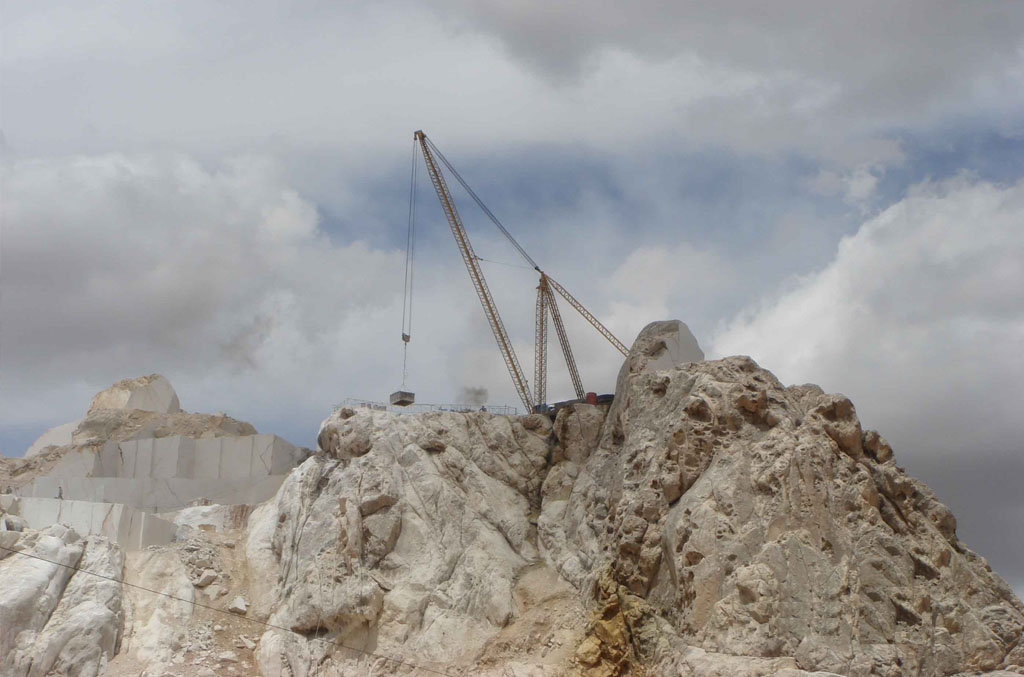
A crucial point here is to coordinate with the quarry regarding the size of the stone blocks (کوپ) to be cut. This ensures the machine operates at its maximum efficiency.
While the number of wires on a multi-wire machine can be adjusted, it is generally best to operate the machine with the maximum number of wires installed. This is because the machine consumes significant energy (like electricity) while running. Maximizing the number of wires ensures optimal performance and minimizes wear and tear on the machine.
Types of stones produced by the multi-wire machine:
Yes, this is possible, and the working method is as follows: first, the multi-wire machine cuts the block into slabs, and then from these slabs, free-length stones of 40 (tiles) or other forms used are cut.
Cutting slabs into tiles or any other shape is done by a gantry milling machine. The desired slab is placed on the relevant table and cut with the required disc.
It is even possible to trim the slab itself with the gantry milling machine because the edges of the slab after cutting by the multi-wire are jagged and need trimming.
Stones that do not have a good shape and need correction for use are cut into a usable form by the gantry milling machine.
It should be noted that the gang saw machine has the capability to cut the hardest stones, but it should be considered that the amount of waste produced from cutting is high because the thickness of the disc that cuts the stone is large, and therefore stone waste increases.
But with the multi-wire machine, we can cut any type of stone in any size; it even cuts softer stones much better compared to other machines. Now the question is, what technology does the multi-wire machine have that allows it to cut even soft stones with such precision?
If you touch the segments inside the diamond wire by hand, you will notice how soft the surface of these segments is. Now another question arises: how can it cut stone easily and with the highest quality with such a soft surface?
In response, it can be explained that this machine cuts stone easily due to its very high speed. The speed that can be mentioned for this machine is about 30 to 40 meters per second, meaning the diamond wire rotates 30 to 40 meters per second.
This high speed causes a very smooth and gentle advancement in the block, whereas in a saw machine, the segment is dragged over the surface of the stone. Other disadvantages include the low speed of that machine and the high vibration during cutting, and all these disadvantages are also observed in the gang saw.
It should be noted that for cutting marble stones and generally soft stones, the multi-wire machine cuts about four times faster than other machines.
Cutting a block in 2 to 3 hours with a multi-wire machine is possible, whereas with a saw machine it takes about 10 hours. It can be said that the production capacity of one multi-wire machine is equal to three or four saw machines.
Another advantage of the multi-wire is the significant reduction in cutting costs. Although the cost of the multi-wire machine is considerable, it has a very long lifespan and also increases production speed as mentioned above.
With the high speed of this machine, factory production increases significantly and noticeably.
Another feature of the multi-wire machine is that since it can cut any stone with any physical shape, it does not create limitations in selecting blocks.
Those who have experience buying blocks from mines know that cubic and regular-shaped blocks are much more expensive than irregular ones. However, irregular blocks from the same mine are much cheaper. Therefore, by purchasing a multi-wire machine, we can buy any block with any geometric shape at a much lower price and then easily cut it using the machine.
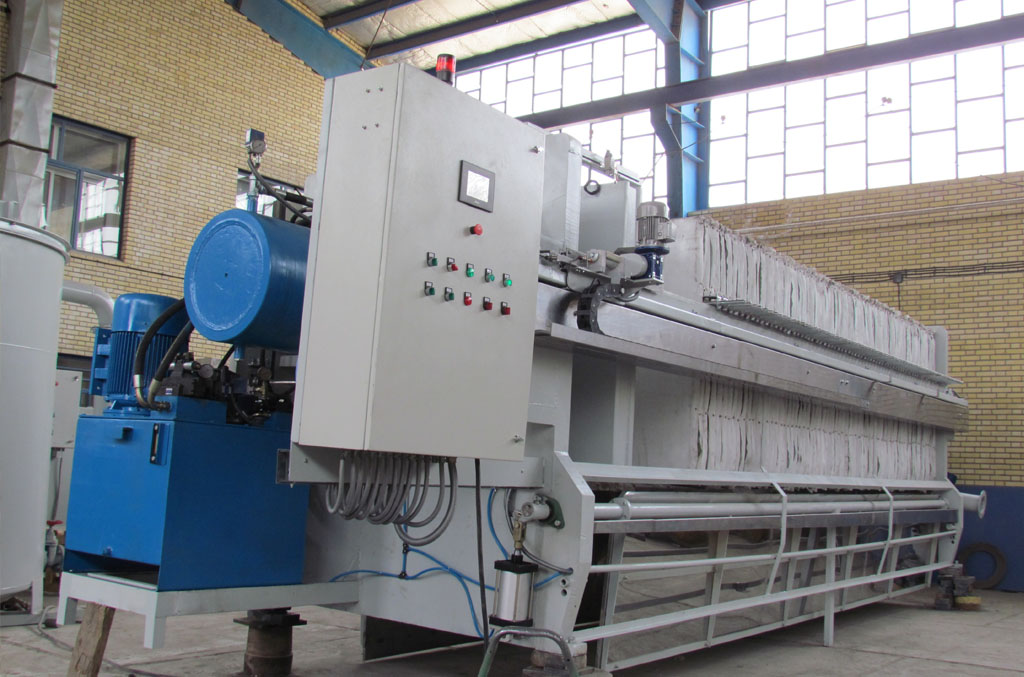
Another important point in this machine is that the wagon under the machine is movable. This feature is very important when we place the block under the machine and after setup and wire adjustment, we realize that the block should be slightly moved. In this case, without disturbing the machine settings, we can move the stone using the wagon.
The wagon rotation is controlled by the machine’s electrical panel. One of the features of the panel is that it has a display screen and network capability, allowing full remote control and monitoring of errors.
Maintenance service is also controlled by the machine’s electrical panel. This includes lubrication, greasing, and replacement of parts after certain working hours. Many of these tasks are performed automatically or indicated through alarms.
Even via mobile phone or computer, the machine can be monitored and its alarms can be checked.
Multi-wire working process:
Above, we discussed the advantages of using multi-wire; here we examine its working process:
What is diamond wire:
Diamond wire is essentially a steel cable (core wire) on which various components are mounted depending on the type, with the common element being the segment.
What is a segment:
A segment is a hollow cylindrical part used to cut stone. Its material varies depending on the type of stone being cut, and different designs exist.
The number of segments per wire length varies depending on application. Some machines use more segments, others fewer.
The outer coating of segments is usually diamond, either natural fine diamonds or synthetic ones, depending on the stone type.
Separators between segments may be polymer or spring-based. Bushings and springs are also used to create spacing and flexibility.
Another important factor is segment thickness, which varies by machine and application.
In multi-wire machines, segments of 6, 7, and 10 mm are used depending on technology.
Advantages of using thinner wire:
Using thinner wire allows:
Types of wires:
As mentioned, different wires are used depending on the stone type. Even for the same stone type (e.g., marble from different mines), different wires may be required.
Cutting methods:
Two methods are used:
Advantages of water cutting:
Water removes debris and dust generated during cutting.
There are also dry wires used where water is unavailable or not economical.
This dry cutting technology is more advanced than water-based cutting.

Dena Fanon's Sales Department is available every day of the week to answer your pre-purchase inquiries.

All products and machines are provided with a warranty from Dena Fanon Company along with support services.

We always have the best ideas and the latest production technologies to improve your business.

We are with you every day of the week at the main office of Dena Fanon. Always by your side.


Iran/Esfahan/8th km of Tehran road/32nd street /Denafonoon co.
Tell : 03133803936
Fax : 03133803937

You can contact the company's phone numbers during working hours for device purchase request and pre-purchase consultations.

If you have any questions or problems before buying on the site and support problems, you can contact the company's support and sales phone number: 031 33803936.